By: Penelope Vorster, Virginia Department of Conservation and Recreation, Natural Heritage
From January 10th to 18th, the Virginia Department of Conservation and Recreation -Natural Heritage’s Karst program conducted a cave-focused BioBlitz in southwest Virginia with volunteers from the Virginia Speleological Survey (VSS), the Cave Conservancy of the Virginias (CCV), Friends of the Cedars, and local caving organizations, including the VPI Cave Club and Walker Mountain Grotto. This collaborative effort supported a wide range of activities, including cave surveys, bio collections, photography, cave entrance cleanup, landowner service projects, landowner communication and education, and data preparation.
A primary goal of the event was to pair seasoned cave explorers and karst scientists with new, enthusiastic cavers to mentor them in biological inventory methods and cave exploration. Over the course of the week, 40 participants – including 16 mentee explorers – surveyed 20 caves across South West Virginia. The group contributed over 2.5 miles of mapped cave passage to the VSS database, documented several new bat EOs, updated bat records at additional sites. Subterranean fauna inventories were conducted in caves throughout the region, with some sites surveyed for the first time.
The DNH Karst Program is grateful to all our volunteers and collaborators who made this event possible. We would especially like to recognize VSS Director Mike Futrell for identifying priority cave sites and coordinating with many of the landowners; The CCV for generously funding accommodations for volunteers at Natural Tunnel State Park; and our own Zenah Orndorff for coordinating with volunteer logistics and ensuring that participants were well prepared and had fulfilling roles throughout the week.
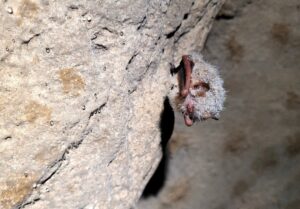
A hibernating Perimyotis subflavus (Tricolor Bat), hibernating in Fugate Cave in Scott Co., VA.
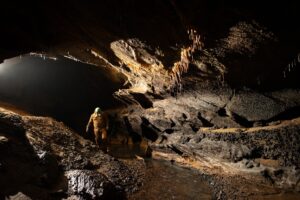
A volunteer from the VPI Cave club searches for invertebrates in the stream. Blair-Collins Cave, Scott Co., VA.